Travel / Tokyo
Tokyo Skytree
A 634-meter self-supporting broadcast tower and observation facility. The Tembo Deck at 350 meters and the Tembo Galleria at 450 meters offer sweeping views of the Kanto Plain. Directly connected to Oshiage and Tokyo Skytree stations, it is the city's premier observation destination.
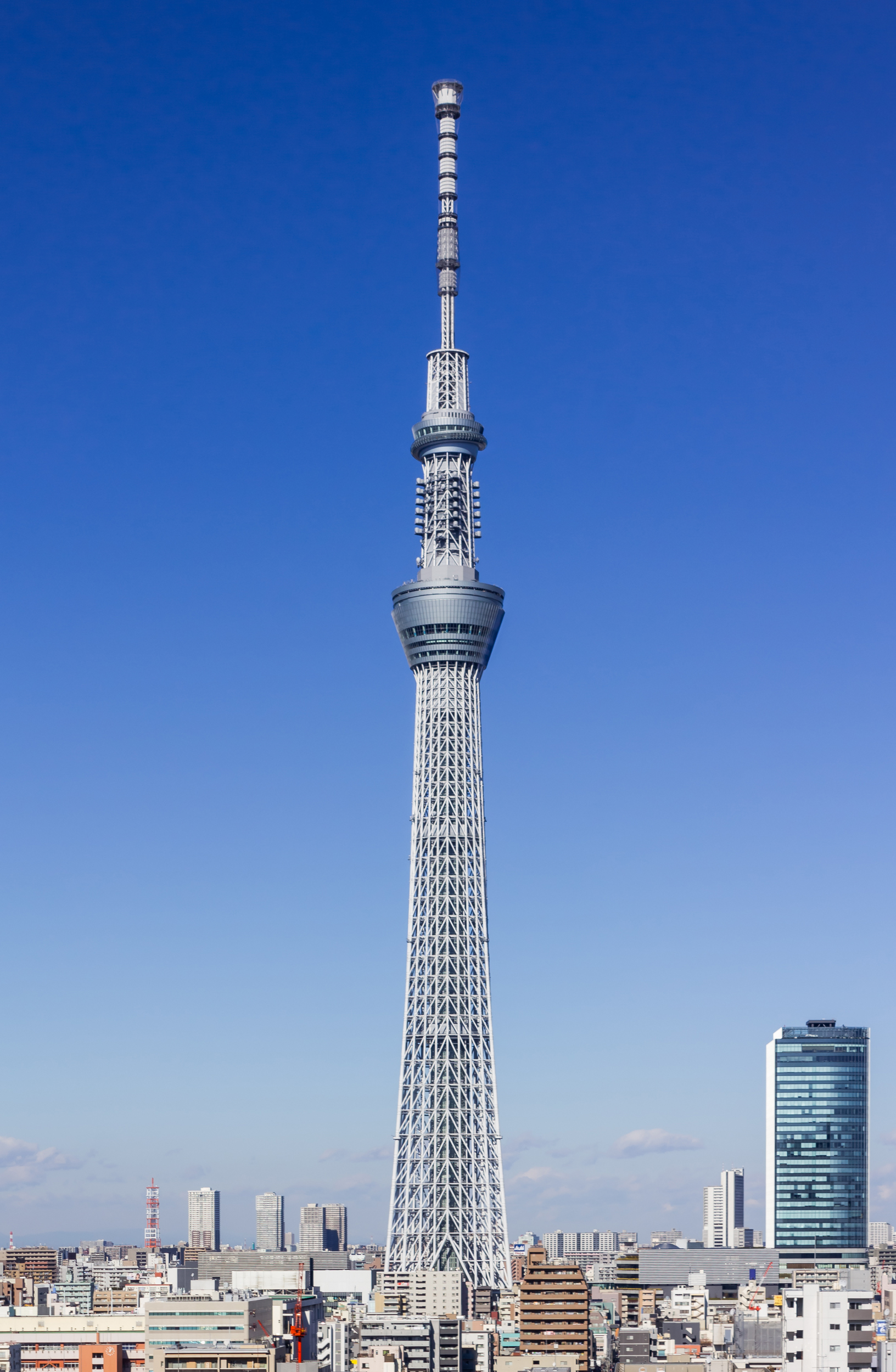
Photo: Kakidai / CC BY-SA 3.0
- Access
- Direct access from Tokyo Skytree Station (Tobu Skytree Line). Direct access from Oshiage (Skytree) Station (Tokyo Metro Hanzomon Line, Toei Asakusa Line, Keikyu, Tobu). Approximately 20 minutes from Tokyo Station (including transfers); approximately 5 minutes from Asakusa.
- Duration
- No official estimated visit time provided (see article body for a practical estimate).
- Price
- Tembo Deck (350 m): Adults from ¥1,800 / Children from ¥900 (dynamic pricing; upper limit varies by date and time; check the official web booking site for pricing on your visit date). Tembo Galleria (450 m): Adults ¥1,400 / Children ¥700 (fixed price, added on top of Deck admission). Deck + Galleria combo: Adults from ¥3,000 / Children from ¥1,500. Children aged 5 and under: Free. Tickets purchased at the on-site counter carry an additional ¥500 handling fee per ticket. Online booking recommended.
- Hours
- Approximately 9:00 AM–10:00 PM (hours vary by day; last admission is one hour before closing). Check the official calendar for details.
- Closed
- Irregular closures (maintenance shutdowns may occur). As of August 2, 2026, the official calendar shows all-day maintenance scheduled for November 1–30, 2026. However, the official website notes that 'operating hours are subject to change without notice,' so please verify the latest schedule on the official hours page (https://www.tokyo-skytree.jp/open-hours/) before your visit.
- Source: チケット・料金 | 東京スカイツリー (confirmed August 2, 2026)
- Source: 公共交通機関でのアクセス | 東京スカイツリー (confirmed August 2, 2026)
- Source: 営業時間・メンテナンス休業カレンダー | 東京スカイツリー (confirmed August 2, 2026)
Prices and hours may change. Please check the official site before you go.
634 Meters Tall — What Japan's Self-Supporting Broadcast Tower Actually Is
Tokyo Skytree is a 634-meter broadcast tower that opened in 2012. It was built to replace Tokyo Tower as the transmission hub for terrestrial digital broadcasting and continues to send digital TV and radio signals across the greater Kanto region. As the world's tallest self-supporting steel tower, its height of 634 meters is an official figure chosen as a play on words: 6-3-4 reads as "mu-sa-shi" in Japanese, referencing the ancient province of Musashi. The tower's distinctive silhouette shifts from a triangular cross-section at the base to a circular form at higher elevations, a result of its steel truss structure. At the structural core is a system called "shinbashira seishin" (central pillar vibration control): a concrete shaft running through the center of the tower uses a phase difference to cancel out seismic sway, reducing oscillation by up to approximately 50%. The concept was inspired by the earthquake-resistant principles found in Japan's traditional five-story pagodas — a tower that transmits signals to the world while quietly absorbing the ground beneath it.
Tembo Deck (350 m) — Tokyo Spread Out Like a Map Beneath Your Feet
Located 350 meters above ground, the Tembo Deck spans three floors — Floor 340, 345, and 350 — and serves as Skytree's main observation area. On a clear day, you can see across most of the Kanto Plain, all the way to Mount Fuji and the Chichibu mountain range. A section of Floor 340 features a reinforced glass floor panel, allowing you to look straight down to the street below. It's a trial for anyone with a fear of heights, but watching other visitors' reactions is entertaining in its own right. Admission to the Tembo Deck uses dynamic pricing, starting from ¥1,800 for adults (the upper limit changes by date and time; check the official web booking site for exact pricing on your visit day). Buying tickets at the 4th-floor counter adds a ¥500 handling fee per ticket, so purchasing in advance through the official website is the smarter choice. Popular dates — weekends and evening time slots — tend to get crowded and can involve a wait, so booking early is advisable.
Tembo Galleria (450 m) — The View Rotates as You Walk a Spiral Ramp
Take a dedicated elevator up from the Tembo Deck and you reach the Tembo Galleria (Floors 445 and 450), 450 meters above ground — the highest observation area in Skytree. A glass-enclosed spiral ramp lets you walk a full loop while taking in a 360-degree panorama; as you move along the spiral, your sightline naturally rotates so you see Tokyo from every cardinal direction. The Galleria is accessed with a separate add-on ticket (Adults ¥1,400 / Children ¥700), available only to those who have already entered the Tembo Deck. The 100-meter jump in altitude may sound modest, but it's equivalent to stacking the entire special observation deck of Tokyo Tower on top of where you were standing. From late afternoon into evening, the reflected light off Tokyo Bay and the Sumida River merges with the glow of the city's high-rises, creating a scene completely unlike the daytime view. Time your entry to the Galleria around sunset and you can watch the sky transition from day to night while walking the ramp.
Getting There and Tips for Your Visit
Access to Tokyo Skytree is excellent. Tobu Skytree Line's "Tokyo Skytree Station" connects directly to the facility, so you can walk in without an umbrella even on a rainy day. "Oshiage (Skytree) Station," served by the Tokyo Metro Hanzomon Line, Toei Asakusa Line, and Keikyu Line, also connects directly — approximately 20 minutes from Tokyo Station and about 5 minutes from Asakusa. As a practical time estimate, visiting both the Tembo Deck and Tembo Galleria typically takes around 2 to 3 hours depending on crowds (no official estimate is listed on the official site). Add dining and shopping at Solamachi and a half-day or more is not unusual. Before you visit, be sure to check operating hours and closure information. Standard hours are roughly 9:00 AM–10:00 PM, but closing time varies by day and last admission is one hour before close. As of August 2, 2026, the official calendar shows all-day maintenance for November 1–30, 2026. That said, the official site includes a notice that "operating hours are subject to change without notice," so if you're planning a fall trip, always confirm the latest calendar on the official hours page before you go. The broader "Tokyo Skytree Town" complex includes Tokyo Solamachi, a large commercial facility in a separate building from the tower, housing over 300 shops across basement level 3 to floor 10 and floors 30–31. With plenty of dining and shopping options, the area pairs well with a Skytree visit for a half-day to full-day outing.

How this character would spend the day
Rena's Recommended Route (Late Afternoon Start — Night View Course)
- 16:30Arrive at Oshiage (Skytree) Station. Take a quick break at a Solamachi café and double-check your web booking tickets on your phone. Sort out the entry logistics before you need them.
- 17:00Enter the Tembo Deck (350 m). Take in the pre-dusk Tokyo view and try the glass floor. Make sure to check the Mt. Fuji-facing view from Floor 345 while there's still daylight.
- 17:45Head up to the Tembo Galleria (450 m) timed to sunset. Walk the spiral ramp and aim for the moment when the evening sky gives way to the night cityscape. Switch your phone to night mode for photos.
- 19:00Move to the restaurant floor in Solamachi. A seat with a Sumida River view is best secured with a reservation. Let dinner carry the mood after the night view.
- 20:30Do a loop through the Solamachi souvenir floor, then head home. The direct connection to Oshiage Station makes it easy even with bags.