Travel / Kyoto Prefecture
Kiyomizudera
Founded in 778; designated a UNESCO World Heritage Site in 1994. The head temple of the Kitahossō sect, renowned for its 'Kiyomizu Stage' and the Otowa waterfall.
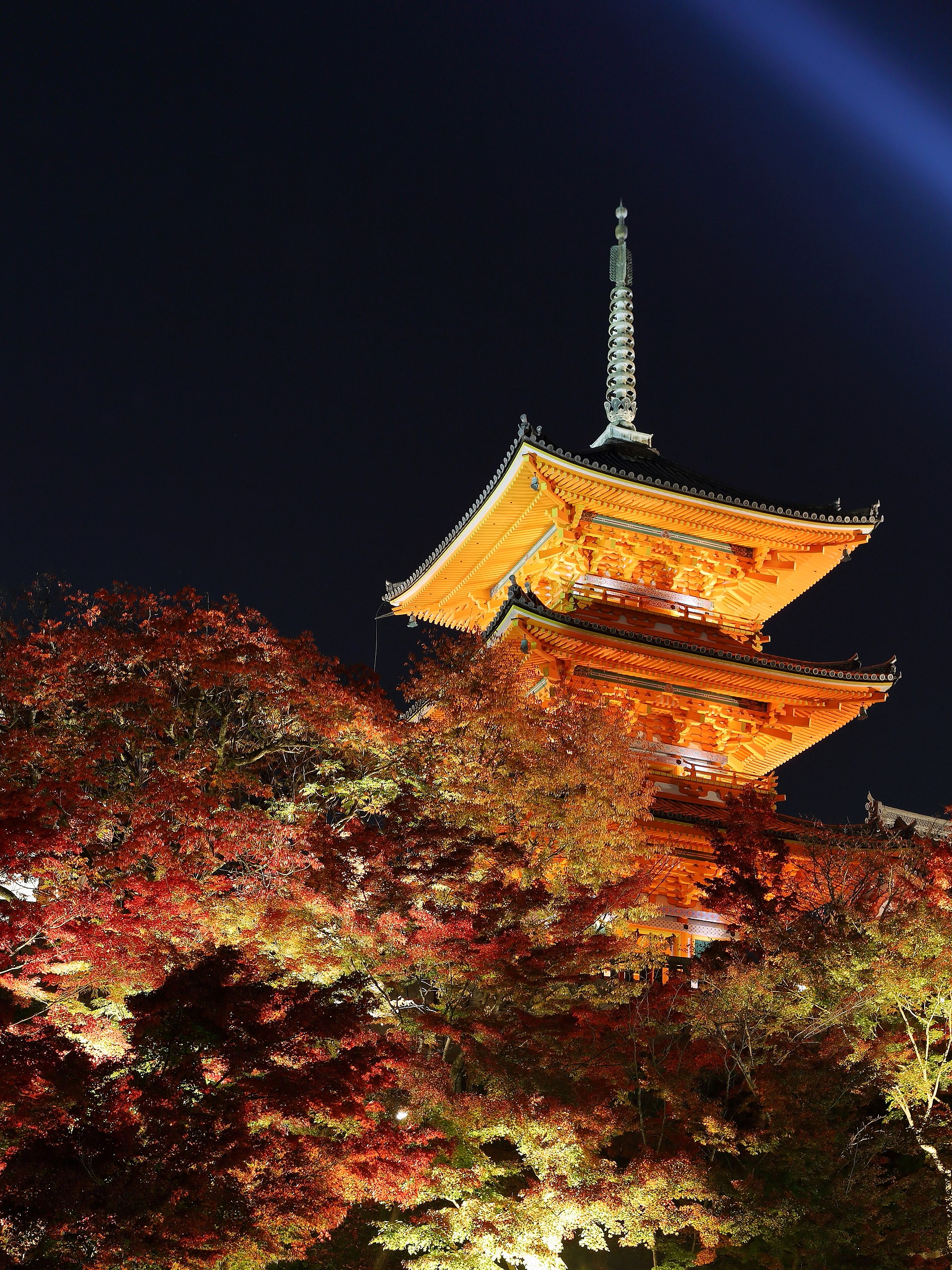
Photo: Martin Falbisoner / CC BY-SA 4.0
- Access
- From JR Kyoto Station, take City Bus Route 206 (bound for Kitaoji Bus Terminal) or Route 100 (bound for Ginkakuji) and alight at the 'Gojozaka' stop, then walk east for approximately 10 minutes. From Keihan 'Gion-Shijo' or Hankyu 'Kyoto-Kawaramachi' stations, take a city bus to the 'Kiyomizumichi' stop and walk approximately 10 minutes. From Keihan 'Kiyomizu-Gojo' station, it is approximately a 25-minute walk.
- Duration
- Allow 90 minutes to 2 hours to cover the main route from the Niomon Gate through the Kiyomizu Stage, Okuno-in, and Otowa Waterfall.
- Price
- Adults ¥500, elementary and junior high school students ¥200 (as of July 2026). Separate fees apply for the special opening of the Joju-in Garden and the Zuiguido womb-passage experience (fees vary by year and period; see the official website for details). On-site cash payment only.
- Hours
- Regular hours: 6:00 AM–6:00 PM (until 6:30 PM in July and August). During special night illumination periods in spring, summer, and autumn: until 9:30 PM (last entry 9:00 PM).
- Closed
- Open year-round
- Source: 交通 | 音羽山 清水寺 (confirmed July 29, 2026)
- Source: 拝観時間のご案内 / open hours | 音羽山 清水寺 (confirmed July 29, 2026)
- Source: 清水寺の舞台裏 | 音羽山 清水寺 (confirmed July 29, 2026)
- Source: 清水寺 | 【京都市公式】京都観光Navi (confirmed July 29, 2026)
- Source: 成就院庭園特別拝観 | 【京都市公式】京都観光Navi (confirmed July 29, 2026)
Prices and hours may change. Please check the official site before you go.
A UNESCO World Heritage Site with Over 1,200 Years of History, Representing Kyoto
The origins of Kiyomizudera date back to 778. According to tradition, the monk Enchin was guided by a vision of the ascetic Gyoei and enshrined a thousand-armed Kannon deity beside a waterfall on Mt. Otowa; in 798, the general Sakanoue no Tamuramaro is said to have donated a hall to the temple. Through repeated fires and reconstructions over the centuries, most of the current buildings were rebuilt in 1633 through a donation by Tokugawa Iemitsu. In 1994, the temple was inscribed on the UNESCO World Cultural Heritage List as part of the 'Historic Monuments of Ancient Kyoto,' and it attracts millions of visitors from Japan and abroad throughout the year. The temple is the head of the Kitahossō sect and serves as the 16th site on the Saigoku Kannon Pilgrimage of thirty-three temples. Its principal object of worship is a standing eleven-faced, thousand-armed Kannon, a secret Buddha shown to the public only once every 33 years. Passing through the Niomon Gate and climbing the stone steps, visitors are greeted by the vermilion-painted Seimon Gate and a three-story pagoda designated as an Important Cultural Property. The temple grounds take on an entirely different character with each season—cherry blossoms, fresh greenery, autumn foliage, and snow.
The 'Kiyomizu Stage' — Built Without a Single Nail
The most celebrated feature of the temple grounds is the 'Kiyomizu Stage,' which projects dramatically from the front of the main hall. Jutting out from a cliff approximately 13 meters high, it is supported by 18 large zelkova pillars arranged in an intricate system known as kakezukuri (suspended construction). This framework was assembled entirely with wooden mortise-and-tenon joinery — not a single metal nail was used — and it has withstood centuries of earthquakes and typhoons. The stage floor measures approximately 190 square meters. After paying respects to the eleven-faced, thousand-armed Kannon inside the main hall and stepping out onto the stage, visitors are greeted by a sweeping panorama of the Higashiyama mountain range and the cityscape of Kyoto. The Japanese idiom 'to jump off the Kiyomizu Stage' — meaning to take a bold leap — derives from the height and sense of openness of this very spot. Historical records from the Edo period show that people actually did jump from the stage in the belief that surviving the fall would grant a wish; today, a safety railing has been installed.
The Sacred Three-Stream 'Otowa Waterfall' and the View from Okuno-in
Below the main hall, the 'Otowa Waterfall' springs from the rock face of Mt. Otowa — the very source of the temple's name, Kiyomizudera ('Pure Water Temple'). The water flows in three separate streams, each said to grant a different blessing: academic achievement, success in love, and longevity. A steady stream of visitors lines up to drink a sip from each using long-handled ladles. Known since ancient times as 'golden water' and 'water of long life,' the crystal-clear spring combined with the atmosphere of the grounds creates an unmistakable sense of sacred space. Located to the south of the main hall, Okuno-in is a hall built in the same kakezukuri style as the stage. The full view of the Kiyomizu Stage seen from here — capturing the grandeur of the main hall in its most three-dimensional aspect — has become a popular photography spot. During the cherry blossom and autumn foliage seasons, the stage and the colors of nature create a spectacular scene; early morning visits offer fewer crowds and beautiful light.
How to Enjoy the Grounds and a Practical Guide
The temple grounds are divided into a free zone and an area requiring an admission fee. The area around the Niomon Gate, Seimon Gate, and three-story pagoda can be viewed for free, but admission of ¥500 for adults and ¥200 for elementary and junior high school students is required to access the Kiyomizu Stage (main hall), Okuno-in, and the Otowa Waterfall (as of July 2026; on-site cash payment only). Additional experiences such as the Zuiguido womb-passage and the special autumn opening of the Joju-in Garden are also available (fees vary by year and period; check the official website for details). The most convenient way to access the temple is by bus from Kyoto Station. Take Route 206, alight at the 'Gojozaka' stop, and walk east up the slope for about 10 minutes to reach the Niomon Gate. On busy weekends and public holidays the Kiyomizuzaka approach can get very crowded, so visiting right at the 6:00 AM opening is the best way to explore at a relaxed pace. The path consists of cobbled slopes, so comfortable walking shoes are a must. Along the approach, shops selling Kyoto sweets, yatsuhashi, and matcha treats line the street, making food strolling a highlight of the visit.

How this character would spend the day
Kiyoshi's Recommended Route (Leisurely History Course)
- 06:15Pass through the Niomon Gate just after opening. Walk quietly through the grounds while there are still few tourists, and gaze up at the three-story pagoda in the morning light. Jot in the notebook: 'Rebuilt 1633 — three-story pagoda — Important Cultural Property.'
- 06:40Pay the ¥500 admission and head to the main hall. Pay respects to the eleven-faced, thousand-armed Kannon, then step out onto the Kiyomizu Stage. Look out over the misty Kyoto cityscape and the Higashiyama range, letting the mind wander to the view Tamuramaro himself might have seen.
- 07:10Proceed to Okuno-in and take in the full view of the stage head-on. Examine the kakezukuri pillars up close and add to the notes: '18 zelkova pillars, no nails.'
- 07:30At the Otowa Waterfall, take a sip from each of the three streams. Join the 'longevity' line and quietly offer up a wish.
- 08:15Stroll leisurely down Sannenzaka (Sannen Slope) along the approach, browsing the souvenir shops. Pick out some yatsuhashi for granddaughter Nana-chan and a small Kiyomizuyaki ceramic dish for myself.